Fraser Island Dingo and Swimming Safety
The Queensland Parks rules for wongari (dingoes) and swimming on K'gari (Fraser Island): distances, fines, camping, the ocean, Champagne Pools and the lakes.
On K’gari (Fraser Island) you plan around two things: wongari (dingoes) and the water. Queensland Parks asks you to stay at least 20 m from any dingo, keep children within arm’s reach, carry a stick, walk in groups and never run. It also says swimming is not recommended in any of the waters on or around K’gari, because there are no lifeguards, and the ocean is off-limits for swimming altogether. The rules below come from Queensland Parks and Wildlife Service (QPWS), and every tour on this site works within them, including our featured 3-day tag-along from Rainbow Beach, which starts with a compulsory safety briefing.
Check Availability
Who the Wongari Are
Wongari is the Butchulla name for the dingoes of K’gari. The Butchulla are the Traditional Owners of the island, whose name K’gari means “paradise” in their language; their native title was recognised in 2014, 22 years after the island was World Heritage listed in 1992, and Queensland Parks notes that wongari are significant to the Butchulla people. They are wild predators, not strays. Researchers at UNSW put the island’s population at somewhere between 70 and 200 animals. You are likely to see them trotting along the beach, checking out picnic areas or resting above the tide line, often alone and close to people. That closeness is the problem. A dingo that links people with food can become bolder around them, which is why feeding one is a fineable offence.
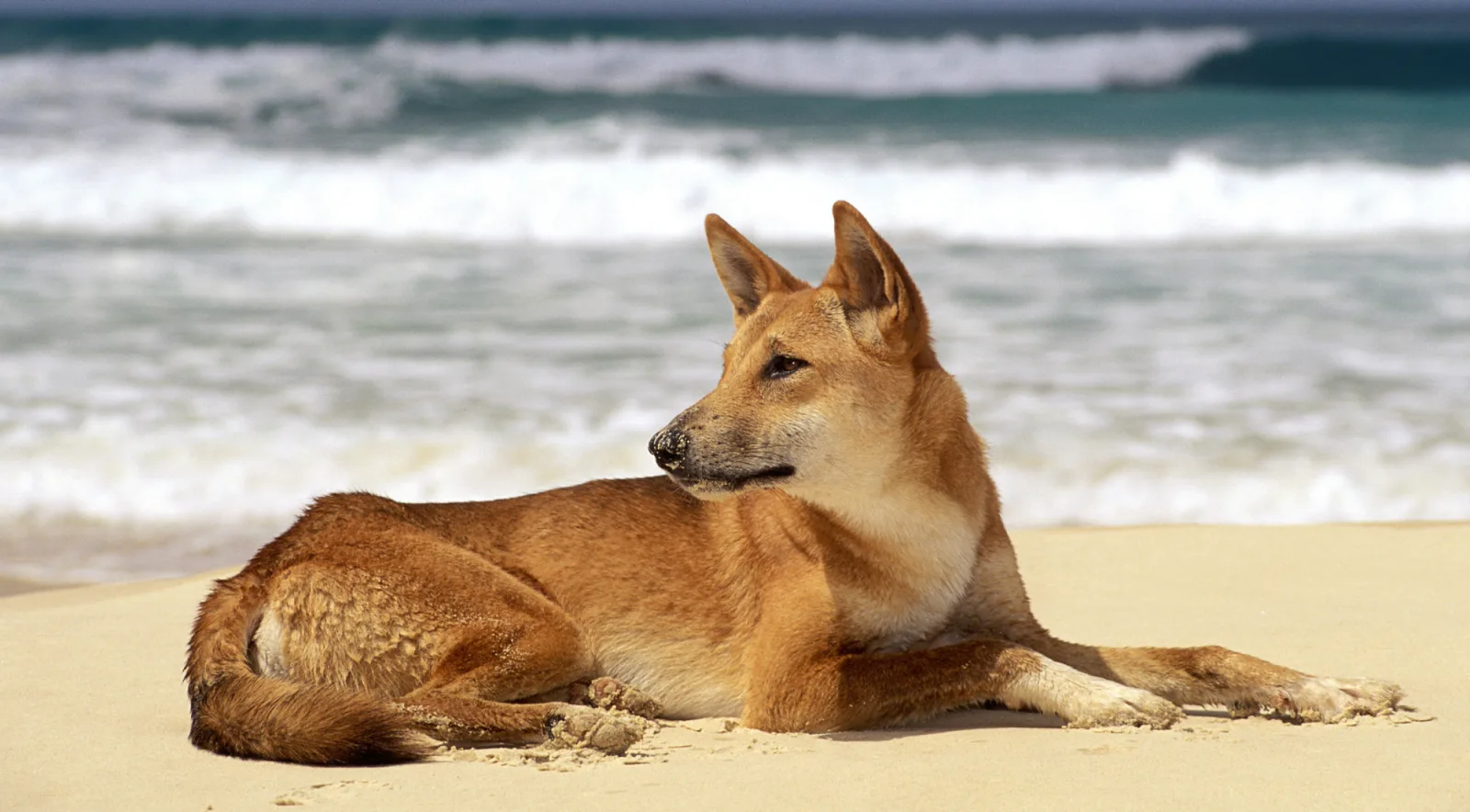
The Dingo-Safe Rules From Queensland Parks
These come from the QPWS “Be dingo-safe!” page and the official visitor guide. They apply to everyone on the island, on a tour or not.
- Children within arm’s reach. Teenagers included, at all times outside a fenced area. QPWS says not even a few metres or a few minutes.
- Carry a stick. A hiking pole, umbrella or fishing rod works too.
- Walk in groups. Don’t walk alone, and don’t swim alone.
- Never run or jog. QPWS says people running on K’gari have been threatened and bitten. That includes running along the beach for fun.
- Stay at least 20 m away. About four car lengths. Use a zoom lens for photos.
- Never feed them, and keep food locked away. No food in tents, no food or drink other than water at lakeshores, rubbish locked in your car or taken to the fenced waste stations.
If a dingo approaches, stand tall and face it. With a companion, stand back-to-back. Call out for help and back away calmly to a car or a fenced area. Don’t turn and run. Report any incident to rangers on (07) 4127 9150, and call 000 in an emergency.
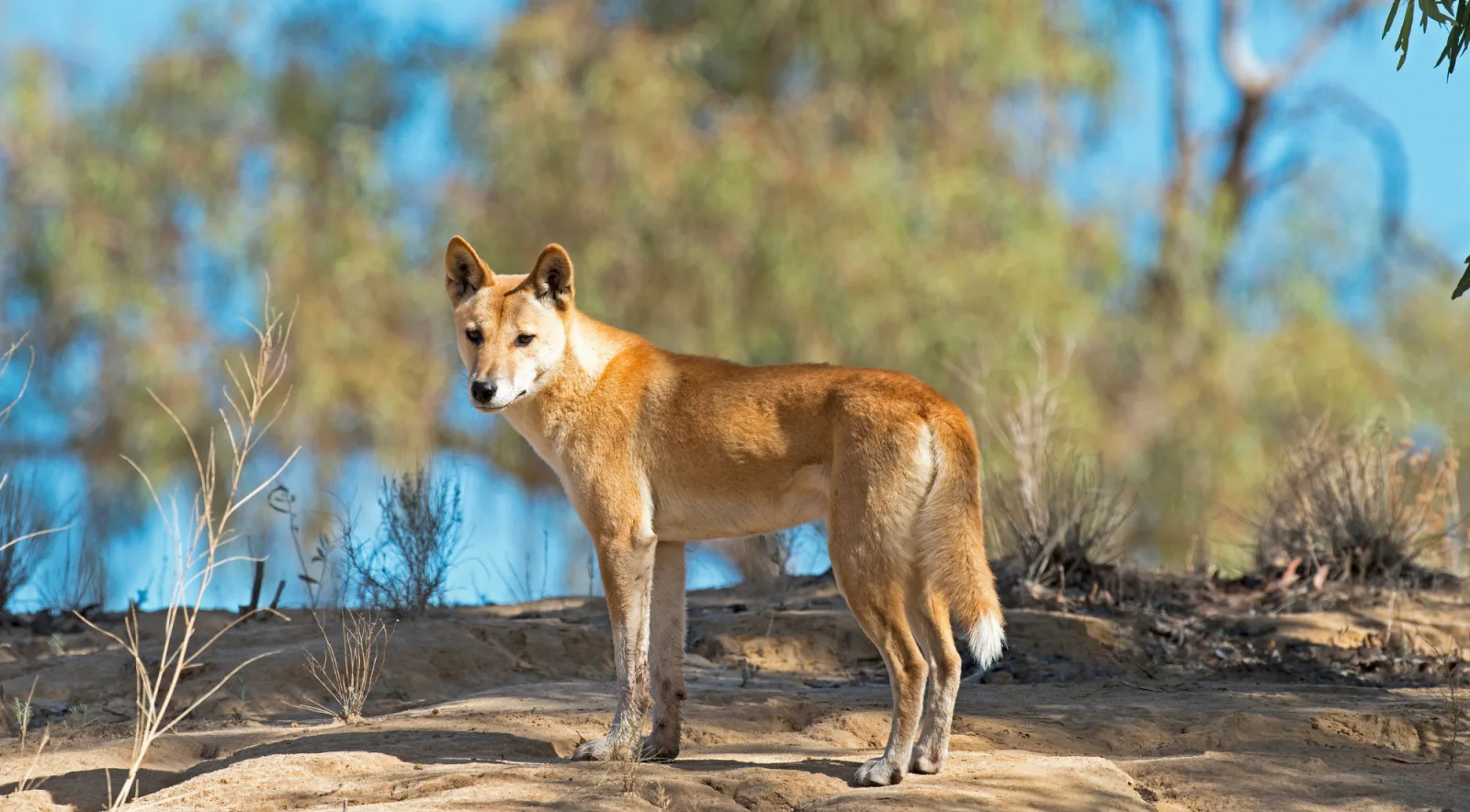
Dingo Fines From 1 July 2026
The fines are set in Queensland penalty units and rise every 1 July. The rates below apply from 1 July 2026, and a ranger or police officer does not have to be present for you to be fined.
| Offence | Maximum fine | On-the-spot fine |
|---|---|---|
| Feeding or disturbing a dingo | A$28,495 | A$2,763 |
| Not storing food securely, or leaving fish scraps unburied | A$6,908 | A$518 |
Older figures (A$2,088 and A$10,444, from 2019) still circulate online. They are out of date.
Recent Incidents and the Pupping Season
Incident numbers have risen over the past few years. News reports counted nearly 30 dingo attacks in 2023, at least 21 incidents in 2024, and 28 high-risk incidents in the first 14 weeks of 2025 alone. A UNSW analysis found that about 40% of serious incidents fall in the breeding season, from March to May.
QPWS also runs a seasonal alert for the wongari rearing and emergence season, from 1 September to 30 November, when pups leave their dens. If you visit in spring, expect park alerts about dingo activity and follow any closures near camps.
In January 2026 a 19-year-old Canadian backpacker died on K’gari after going for an early-morning swim. The coroner found that she drowned after a dingo attack. It was the first death on the island linked to dingoes since 2001. The practical lesson for every visitor: never walk or swim alone, and take extra care around dawn and dusk.
Camping With Dingoes
Queensland Parks strongly recommends that families with children under 14 camp in a fenced campground. The fenced public areas are Central Station, Cornwells, Dundubara, Eli, Lake Boomanjin, One Tree, Wongai, Waddy Point top and Wathumba.
The Rainbow Beach: 3-Day K’gari (Fraser Island) 4WD Adventure spends both nights at a private, enclosed beachside campsite managed by the Butchulla people, according to its listing, and its 2-day version uses the same camp for one night. The fence keeps dingoes out of the sleeping area, so the remaining job is yours: keep the gate closed, keep food in the camp kitchen, and stay with the group when you walk to the beach. If you would rather sleep in a room, the 2-day resort tour from Hervey Bay spends its night at K’gari Beach Resort (our breakdown).
Swimming on K’gari: What Queensland Parks Says
The official visitor guide is blunt: swimming is not recommended in any of the waters on or around K’gari, and there are no lifeguards anywhere on the island. It also warns that spinal injuries and drownings have occurred in the lakes, at Champagne Pools and in near-shore waters. The tours still stop at lakes and creeks, and many travellers go in. If you do, treat every swim as your own decision and follow the rules below.
The Ocean
Do not swim in the ocean off 75 Mile Beach. QPWS names two reasons: strong currents (rips run along the whole eastern beach) and sharks. On top of that, Queensland Parks posts a marine stinger warning from 1 November to 31 May, and there is an estuarine crocodile warning on the western, Great Sandy Strait side of the island. Paddling at the water’s edge is as far as it should go.
Is Champagne Pools the Only Safe Swim?
No, and you will hear that line from other travellers. Queensland Parks recommends swimming nowhere around K’gari. At Champagne Pools, rock pools in volcanic rock on the eastern beach, it suggests a dip only if conditions are safe. The pools fizz at mid-tide, when waves break over the rocks, which is also the time to go. Wear sturdy shoes on the rock, keep clear of the breaking waves, and stay out at high tide or in big seas. The boardwalk down is 700 m return.
Boorangoora (Lake McKenzie) and Lake Wabby
Boorangoora (Lake McKenzie) has white sand at the edge, then deep drop-offs. Never dive or jump into it, into Lake Wabby or into any lake or creek. Three rules surprise visitors:
- No sunscreen, insect repellent, soap or toothpaste in the lakes and streams. Cover up with a shirt and hat instead, or apply sunscreen only after your swim.
- No food or drink other than water at the lakeshore. Eat at the fenced picnic areas back from the shore.
- No drones. Drones are prohibited at Lake McKenzie, including the shore, car park and day-use areas (alert running 21 December 2025 to 10 December 2026).
The lake is busiest from 10:30 am to 3 pm. At Lake Wabby, don’t run, roll or slide down the dune into the water: QPWS reports serious and lifelong spinal injuries there and at Eli Creek. The Lake Wabby walk is under planned maintenance until 7 December 2026.
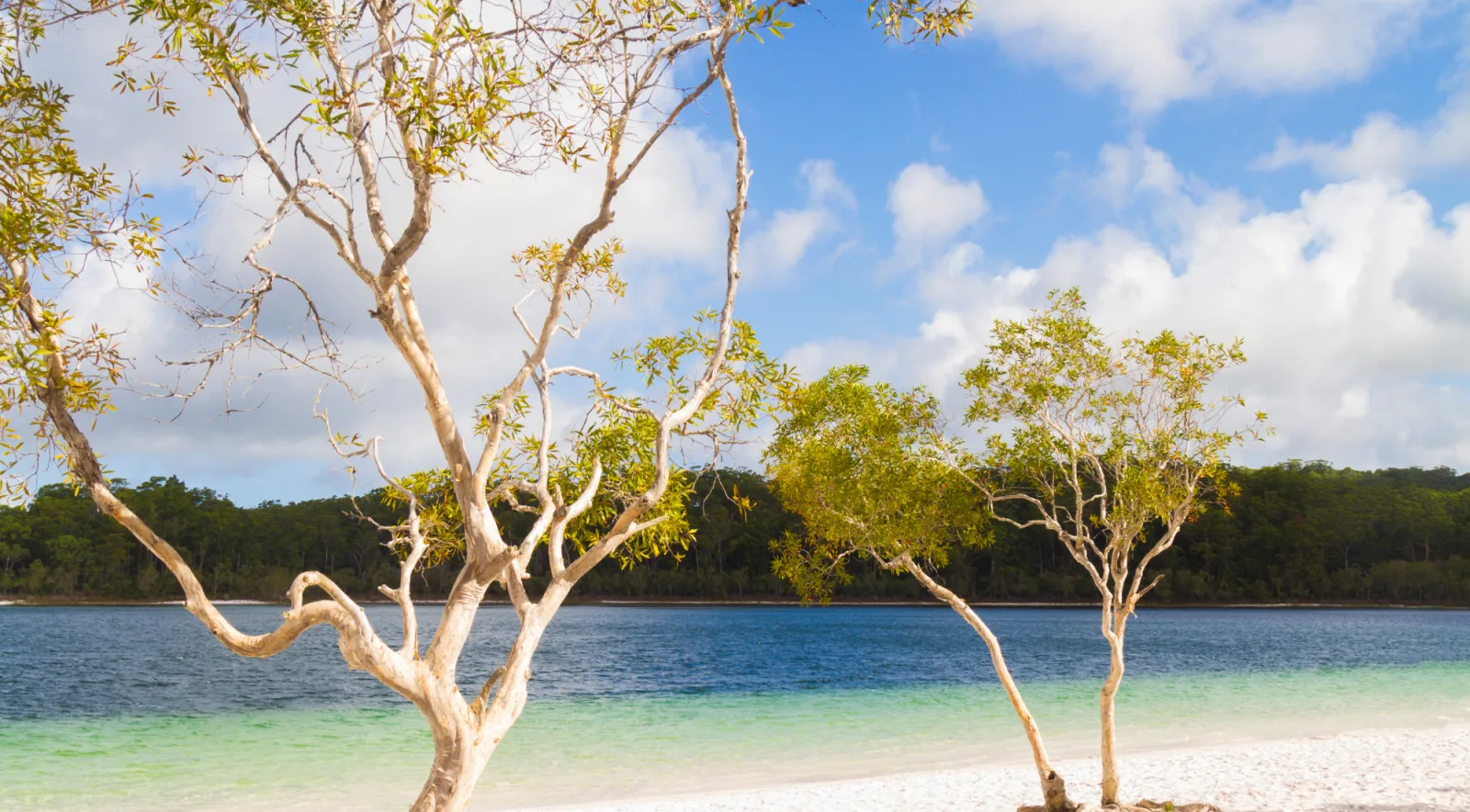
Eli Creek and the Maheno
Eli Creek carries about 80 million litres of fresh water into the sea every day. You walk up the 400 m return boardwalk and float back down the creek to the beach. The same no-sunscreen rule applies, and the dune banks beside the creek are another place not to slide down. A short drive north, the SS Maheno wreck is a photo stop only: look from the sand and don’t climb on the wreck.
Check the Live Park Alerts Before You Go
Closures and seasonal warnings change through the year, so read the live Queensland Parks alerts for K’gari the week you travel. As of November 2026 they include the stinger warning, the dingo rearing season, the Lake McKenzie drone ban and the Lake Wabby walk maintenance. If you are still choosing a trip, our guide to which tour suits you compares the formats, and the self-drive comparison covers what you take on when you hire your own 4WD. On a tour, the guide picks the swim stops around the tides and briefs you on dingoes before you leave the mainland.
Frequently Asked Questions
Is camping with dingoes on K’gari safe?
It depends on where you camp and how you handle food. Queensland Parks recommends fenced campgrounds for families with children under 14, and the 3-day and 2-day tag-alongs from Rainbow Beach use a private, enclosed camp. Keep the gate shut, store all food in the camp kitchen and never walk out of camp alone.
Will I see dingoes on a K’gari tour?
Many visitors see dingoes on the beach or near picnic areas, but sightings are never guaranteed. Watch from at least 20 m away, never feed them, and keep your food out of reach.
Can you swim in the ocean on Fraser Island?
Queensland Parks says not to swim in the ocean around K’gari because of strong currents and sharks, and there are no lifeguards. A marine stinger warning also runs from 1 November to 31 May.
Can I swim at Lake McKenzie?
Tours stop there and many people swim, but Queensland Parks does not recommend swimming in any of K’gari’s waters. If you go in, don’t dive or jump, watch for the drop-off, and wear no sunscreen, repellent or soap in the water.
What is the fine for feeding a dingo on K’gari?
From 1 July 2026, feeding or disturbing a dingo carries a maximum fine of A$28,495 and an on-the-spot fine of A$2,763. Not storing food securely can cost up to A$6,908, or A$518 on the spot.
When is dingo pupping season on K’gari?
Queensland Parks runs a wongari rearing and emergence alert from 1 September to 30 November. The breeding season, from March to May, is when about 40% of serious incidents happen, according to UNSW research.
What should I do if a dingo approaches me?
Stand tall and face it, stand back-to-back with a companion, call for help and back away calmly to a car or fenced area. Never run. Report the incident on (07) 4127 9150, or call 000 in an emergency.
Choose the Right K'gari 4WD Tour
If you're 18–35 and want a turn driving the beach, check availability for the 3-day tag-along in the GetYourGuide calendar, with free cancellation up to 7 days before. With one day, or with children, compare the guided day tours below.
Check Dates & Prices